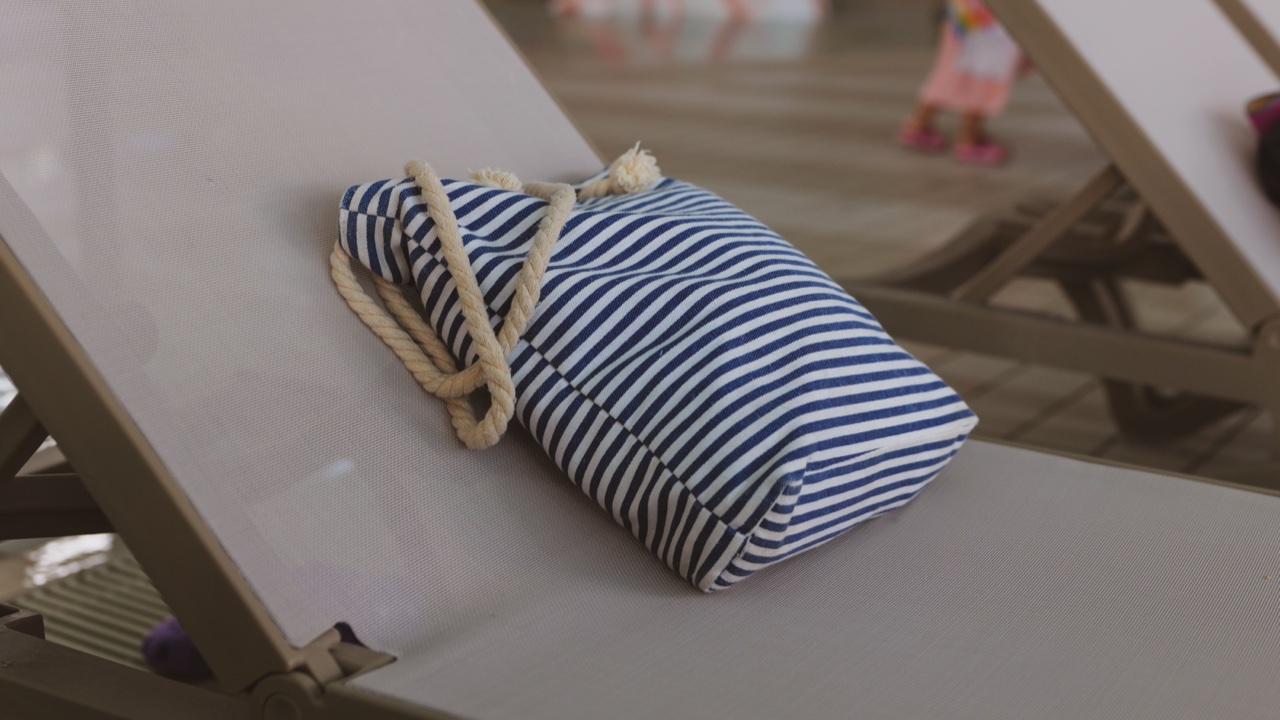
There’s a specific kind of chaos that used to happen every time I got ready for a beach day. A bag for the towel. A smaller bag for sunscreen, keys, and my phone — because the towel bag was too big to reach into while wet and sandy. A dry bag or a ziplock for anything that genuinely couldn’t get wet. Sometimes a cooler for drinks. By the time I got to the car, I was carrying four separate things, at least one of which would be dropped, forgotten, or need to be repacked at the destination.
I watched a friend unpack from a single large tote at the beach a few summers ago and realized the whole multi-bag system was optional. Everything she needed for a full day — towel, change of clothes, sunscreen, snacks, a water bottle, sunglasses, her phone in a sealed interior pocket, keys, a book — came out of one bag that had a designated place for each item and a waterproof section for wet gear. She’d been doing it for two seasons and wasn’t going back.
I haven’t needed more than one bag since.
Why the Math Works
The argument for a single large tote over multiple smaller bags is fundamentally about cognitive load and physical convenience. Carrying multiple bags requires tracking multiple bags. Setting them down requires finding space for multiple bags. Packing up requires collecting multiple bags. Any time one of them gets sandy or wet, the problem multiplies.
A large tote with interior organization solves this by making everything a single unit. The towel goes in the main compartment. Sunscreen, lip balm, and the small items that used to live in a separate bag go in a front pocket or interior pouch. Electronics go in a waterproof pocket that seals properly. Wet swimwear at the end of the day goes in a separate wet compartment or a waterproof section that doesn’t transfer moisture to the dry contents.
The total volume is roughly the same as what you were carrying distributed across three bags. The convenience is dramatically different because it’s one point of failure instead of three, one thing to pick up and put down, and one thing to look for when you’re ready to leave.
What Interior Organization Actually Does
A beach tote without interior organization is a large open bag — useful for volume, not for access. Everything sinks to the bottom, sunscreen gets onto your phone, wet items contaminate dry ones, and the bag becomes a jumble that requires excavation to find anything.
Interior organization changes the use case entirely. A front exterior pocket for the things you reach for constantly — your phone, sunscreen, keys — means those items stay accessible without opening the main compartment. An interior zippered pocket for valuables creates a secure zone that’s separate from the general storage. A bottom wet compartment or waterproof inner lining means damp swimwear or a wet towel doesn’t ruin everything else on the way home.
These are the features that separate a bag designed for beach use from a large tote that happens to be taken to the beach. The difference shows up not when you first look at the bag but at hour six of a beach day, when you need to find your car keys quickly, need to store a wet suit, and need your sunscreen without unpacking everything else to reach it.
The Dry-and-Wet Problem
The single most useful feature in a beach bag for most people is a reliable separation between wet and dry contents. This is the problem that caused the multi-bag system in the first place: your towel and swimsuit are wet, your phone and wallet aren’t, and those two categories don’t coexist well in an unstructured bag.
A few approaches solve this. A fully waterproof inner lining means moisture doesn’t transfer through the bag at all — wet items stay wet, dry items stay dry, and the bag’s exterior doesn’t feel damp when you’re carrying it. A dedicated sealed wet pocket on the exterior provides a separate compartment specifically for wet items. Some bags use both: a waterproof main compartment for everything, with a separate small exterior pouch for items that specifically need to stay dry.
The material of the lining matters as much as the design. A thin fabric lining isn’t waterproof regardless of what the product description says. A welded or heat-bonded TPU or PE liner, with no sewn seams in the wet zone, handles moisture reliably. Running a hand along the seams and interior stitching before buying — or before placing a volume order — is the fastest way to tell which category a bag falls into.
Handles and Carrying Comfort
A tote bag fully loaded for a beach day weighs somewhere between four and eight kilograms depending on what you bring. That’s meaningful weight for a bag typically carried by two short handles.
Handle construction in this weight range matters in ways that don’t show up when the bag is empty. Braided or reinforced handles distribute the load better than flat webbing of equivalent width. Reinforced attachment points — where the handle connects to the bag — are the most common failure point in cheaper beach totes, because this is where stress concentrates when the bag is heavy. Some bags add a shoulder strap as an alternative carry option, which helps significantly for longer walks between the parking area and the beach.
Canvas and coated canvas handles hold up better than raw uncoated fabric for beach use, where they’ll get wet, sandy, and dried out repeatedly over a season. Handles that absorb and hold moisture get heavy and take a long time to dry; coated or treated handles shed water and stay lighter.
The Volume Question
Tote bags get described as “large” across an enormous range of actual sizes. For a solo day at the beach, twenty to twenty-five liters is enough. For a family day or a group trip where you’re the person who ends up carrying things for other people, thirty to forty liters starts to make sense. Above forty liters and you’re moving into territory that requires a shoulder strap to be practical.
The tendency is to underestimate how much a full beach day actually requires: a beach towel alone takes significant volume when folded. Add a change of clothes, snacks for multiple hours, sunscreen, and the assorted items that accumulate in anyone’s beach kit, and what seemed like a generous bag is fully packed before the optional items.
For retailers, resorts, event planners, and promotional buyers sourcing bulk beach bags for gifts, merchandise, or resale, the interior volume and organization of the bag they choose determines whether it actually replaces the multi-bag system or just adds to it. A thirty-liter tote with a wet pocket and interior organization is a meaningfully better product than a thirty-liter tote without those features, even if the exterior dimensions are identical. That difference determines whether the bag gets used every beach day for three seasons or sits in a closet after one trip.
The End-of-Day Test
The real test of a beach bag isn’t at the start of the day when everything is clean, dry, and carefully arranged. It’s at the end, when the towel is wet, the sunscreen has leaked slightly, sand has gotten into everything, and you need to pack up quickly to catch the parking lot before it fills.
A bag that handles that scenario gracefully — wet towel goes in the wet compartment without disaster, everything else stays accessible, the bag closes securely and doesn’t drip on the walk back — is a bag that earns its place as the single carry option for beach days. Most people who’ve had that experience once don’t go back to the multi-bag system.